
Lynx RenderCore™
Portable Rendering for HMI Applications
Lynx RenderCore brings portable HMI development and CPU-rendering flexibility to the Lynx safety-critical graphics ecosystem.
As part of LYNX MOSA.ic.AI, RenderCore enables software teams to develop and deploy graphics applications across CPU, GPU, OpenGL, Vulkan, or hybrid architectures, all within a unified platform.



What is Lynx RenderCore?
Lynx RenderCore powered by PROTOS Software, LLC, is a flexible rendering solution for developing portable graphics and HMI applications. It gives system architects the freedom to select the rendering architecture that best fits their program, without tying the application to a specific hardware platform or graphics implementation.
RenderCore complements Lynx CoreSuite™, which provides standards-based graphics infrastructure, GPU drivers, and runtime services for accelerated embedded graphics. Together, these technologies support a flexible path from early HMI prototyping through deployment and long-term sustainment.
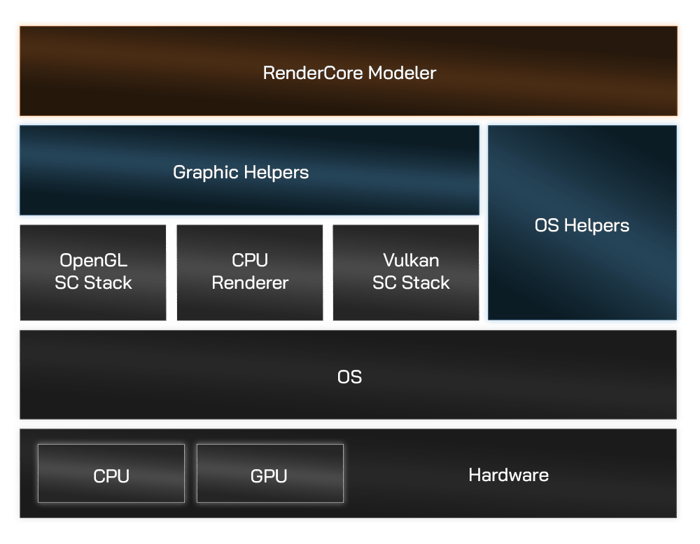

Accelerate HMI Development Across the Program Lifecycle
Some programs require CPU-only hardware platforms. Others need to begin HMI development before the target GPU or driver stack is available. Mixed-criticality systems may also need to place high-integrity graphics on the CPU path while using GPU acceleration for lower-criticality or graphics-intensive workloads.
Lynx RenderCore supports each of these development paths. Teams can prototype and validate graphics applications early, transition between rendering architectures, and adapt to changing hardware requirements without rebuilding the entire application.
Key Benefits

Portable HMI Applications

CPU Rendering Flexibility

GPU and Vulkan Support

Mixed-Criticality Graphics

Faster Prototyping

Reduced Hardware Dependencies
Safety-Critical Graphics Use Cases

Modern Avionics and Cockpit Displays

Large Area Displays

Tactical Visual Systems

Crew Operator Stations

Built on the Lynx Safety-Critical Graphics Ecosystem
Lynx RenderCore is offered as part of the LYNX MOSA.ic.AI platform, complementing Lynx’s existing GPU-accelerated graphics capabilities.
Together, RenderCore and Lynx CoreSuite provide a unified foundation for developing, integrating, and deploying safety-critical graphics across CPU, GPU, and hybrid system architectures. This approach gives teams greater flexibility while supporting performance, portability, mixed-criticality requirements, and long-term program sustainment.

Build a More Flexible Graphics Architecture
Whether you are developing a CPU-only platform, transitioning to GPU acceleration, or designing a mixed-criticality system, Lynx can help you select and implement the right graphics architecture for your program.