
A Critical CVE Landed. What Should Your Embedded Team Do in the First 24 Hours?
The first day is not about producing a perfect answer. It is about creating enough product-specific understanding to make the next decision responsibly.
For a long-life connected device, move from a component alert to a structured response: establish scope, determine what is actually affected, decide what can safely change, reduce exposure when a patch will take time, and record the reasoning behind the call.


Your Response Options Are Created Before the Alert Arrives
The best first-day decisions are made easier before the alert arrives: preserve product evidence, maintain viable correction paths, clarify ownership, and reduce exposure where a permanent fix will take time.
The response path itself also shows what is missing: software visibility, a viable correction path, or longer-term controls that reduce exposure.
One Case. Two Workstreams. Shared Evidence.
Technical certainty and reporting deadlines do not necessarily arrive in the same order. Work both rails in one response case.

Product Response
- Signal: Preserve source.
- Scope: Map shipped builds.
- Determine: Review evidence.
- Respond: Reduce real risk.
- Residual risk: Assign an owner and review.
Coordination
- Signal: Open coordination.
- Escalate: Find decision owners.
- Evaluate: Assess reporting and communication.
- Own: Set due dates.
- Update: Track actions and receipt.
Evidence-Backed Case Record
Coordination makes reporting and communication evaluation explicit; it does not presume an external obligation.
Start by naming the assessed thing as precisely as possible: product family, hardware or configuration, release or build, and deployed population. If that scope is unavailable, create an owned evidence gap rather than manufacturing certainty.
Working rule: A component finding is an input. A product-specific determination is a reviewed decision supported by evidence.
Build an Affectedness Determination, One Fact at a Time
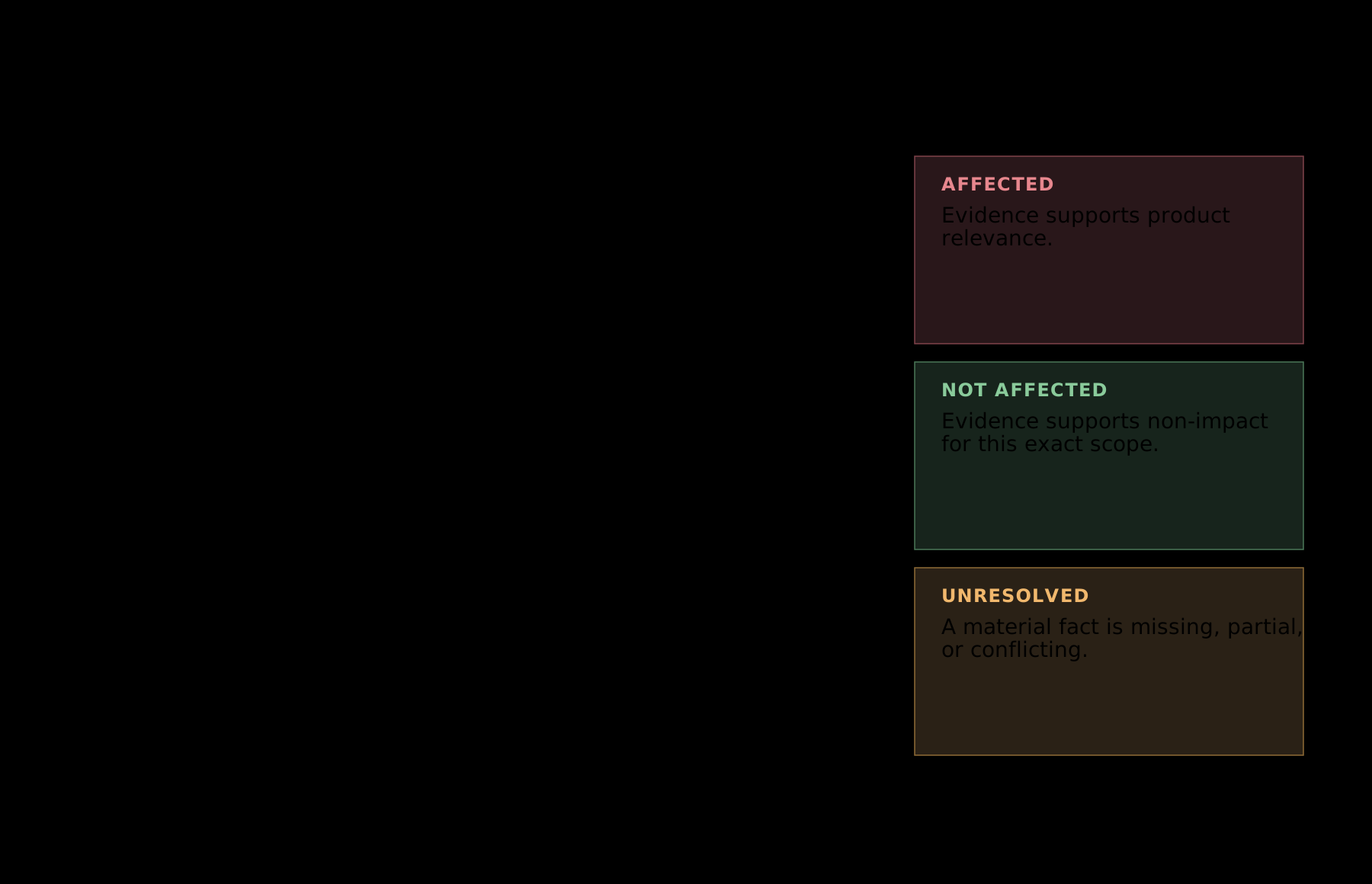
Move through the evidence path until the available facts support a determination—or until the exact missing evidence is named.
Evidence sequence
- Component implicated by the alert. A CVE, advisory, or report names a component with potential vulnerability.
- Mapped to an exact product and build. Tie the component to a released product, configuration, and population.
- Version and downstream patches established. Account for vendor changes and the shipped source state.
- Configuration and enabled features understood. Record what is configured in the actual product.
- Vulnerable functionality confirmed present. Confirm inclusion in the released build.
- Functionality enabled and reachable. Assess intended deployment and exposure context.
- Exploit prerequisites and deployment evaluated. Review access, privileges, controls, and operational conditions.
- Reviewed product-level determination. Record affected, not affected, or unresolved with evidence and reopen conditions.
SBOM limitation: An SBOM can establish component presence in a declared build. It does not, by itself, establish whether a specific deployed product is affected or exploitable.
Capability that can help: Vigiles connects embedded Linux SBOM and CVE operations with configuration-aware triage to reduce irrelevant findings. The final affected, not affected, or unresolved determination still belongs to the product team.
Choose the Safest Viable Response Path
The critical question is not simply whether a patch exists. It is whether the correction can be integrated, validated, deployed, and verified safely in the supported product.
Response options
- Validated correction available now? Integrate, validate in the product, deploy, and verify field uptake.
- Can a safe backport or supported-platform update be prepared? Assess compatibility, validate, and release on an accelerated path.
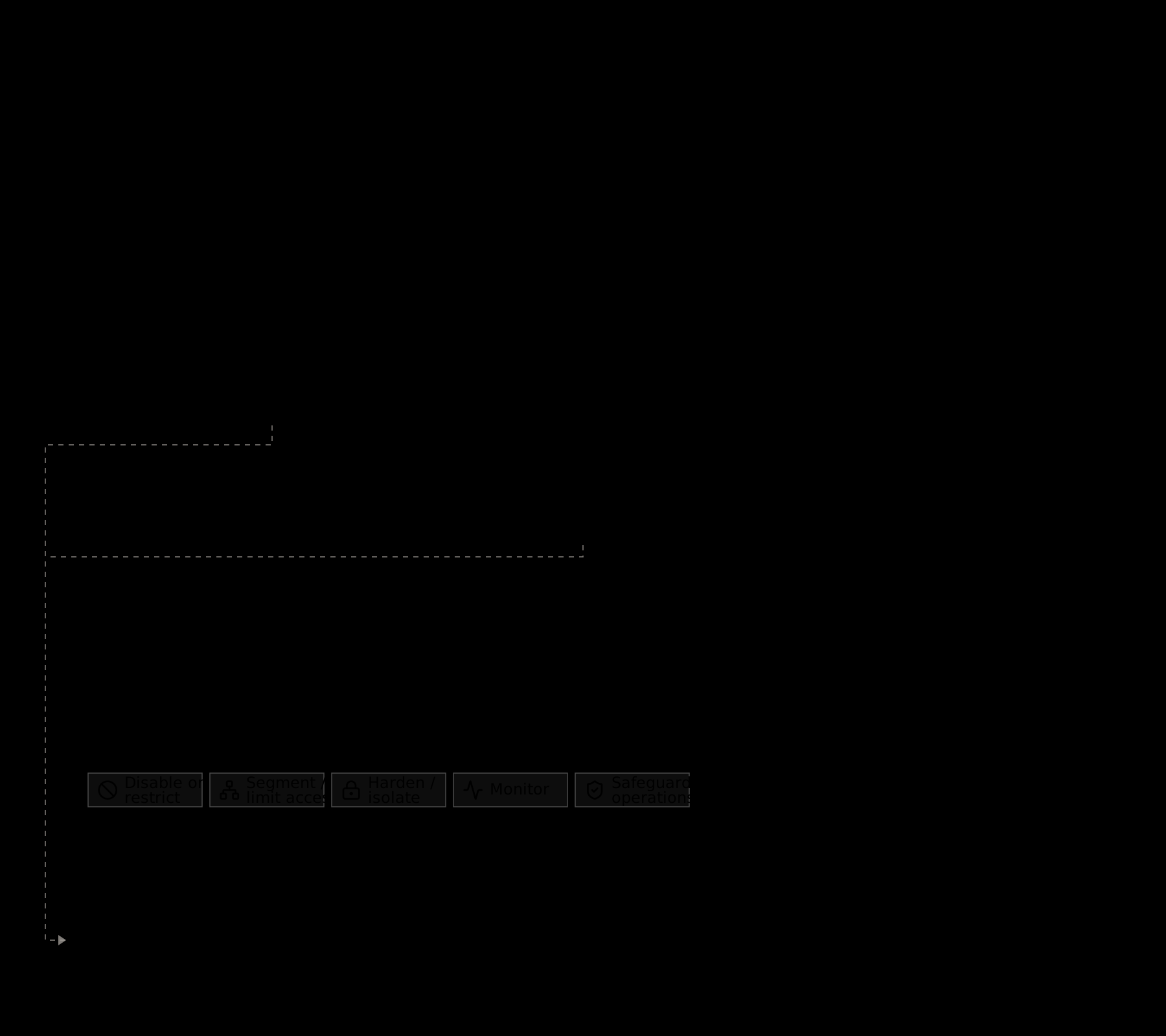
- Can exposure or exploitability be materially reduced? Choose, deploy, and verify compensating controls. Examples include disable or restrict; segment or limit access; harden or isolate; monitor; and safeguard operations.
- When none is adequate, escalate the product decision. Consider containment, operator action, supplier coordination, field service, accelerated replacement, or a lifecycle decision.
A mitigation is a product-specific claim: control selected, intended risk reduction, deployment scope, validation evidence, residual risk, accountable owner, and review date.
Capability that can help: Lynx Long-Term OS + BSP Maintenance helps maintain the OS/BSP baselines, security updates, validation, and release work behind a viable correction path. For applicable memory-corruption and code-reuse attack paths, RunSafe Protect is another option for reducing exploitability while permanent remediation is constrained.